
My Furnace Smells Like Gas: What to Do Immediately
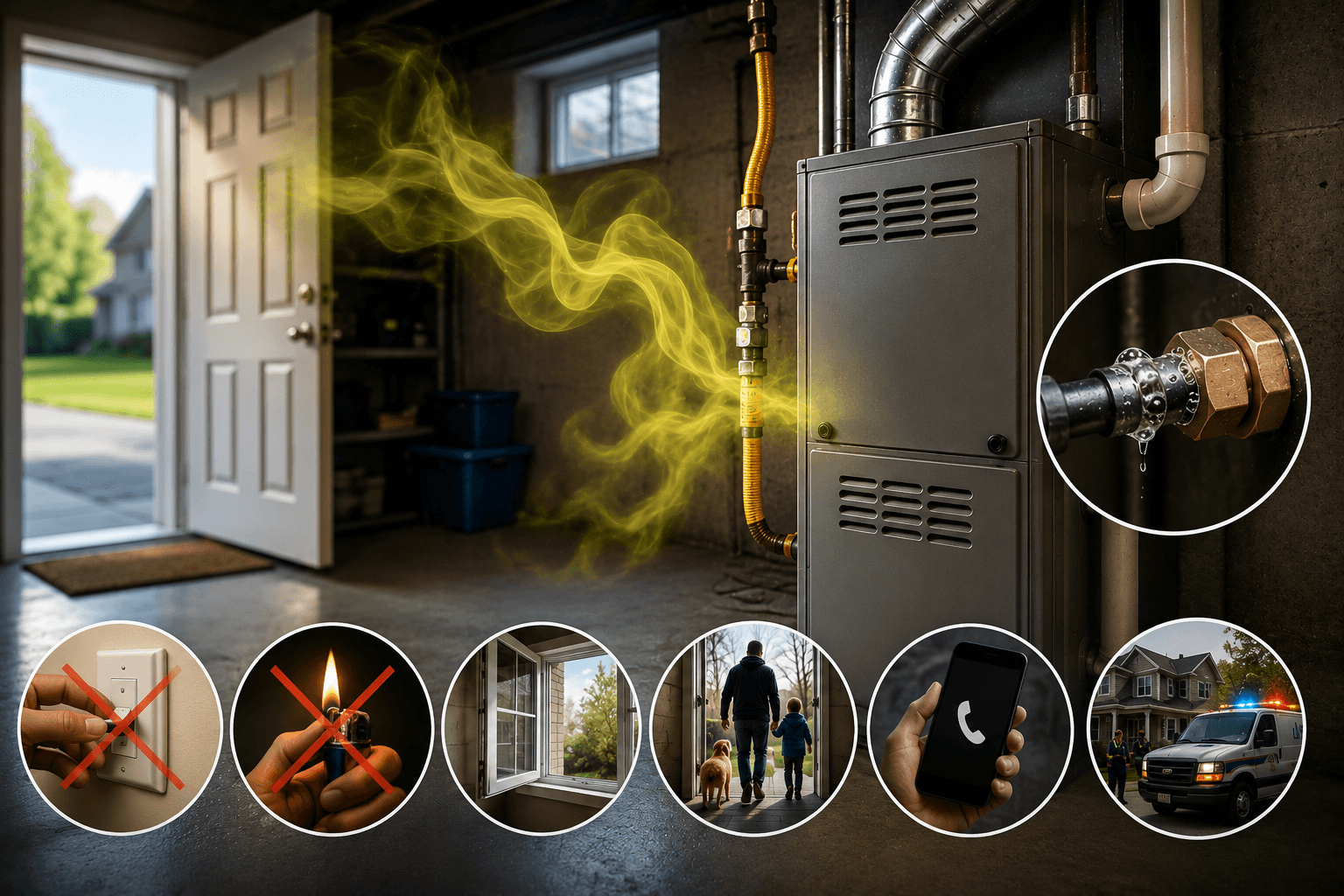
Natural gas, as it comes out of the ground, is completely odorless — which is exactly what made it dangerous before a simple fix was found. Suppliers add mercaptan, a chemical compound with a distinctive sulfur ("rotten egg") smell, specifically so a leak is detectable by human smell well before reaching a dangerous concentration. If you notice this odor near your furnace, the system worked exactly as intended — act immediately, without taking time to diagnose the cause yourself.
The steps to follow, in order
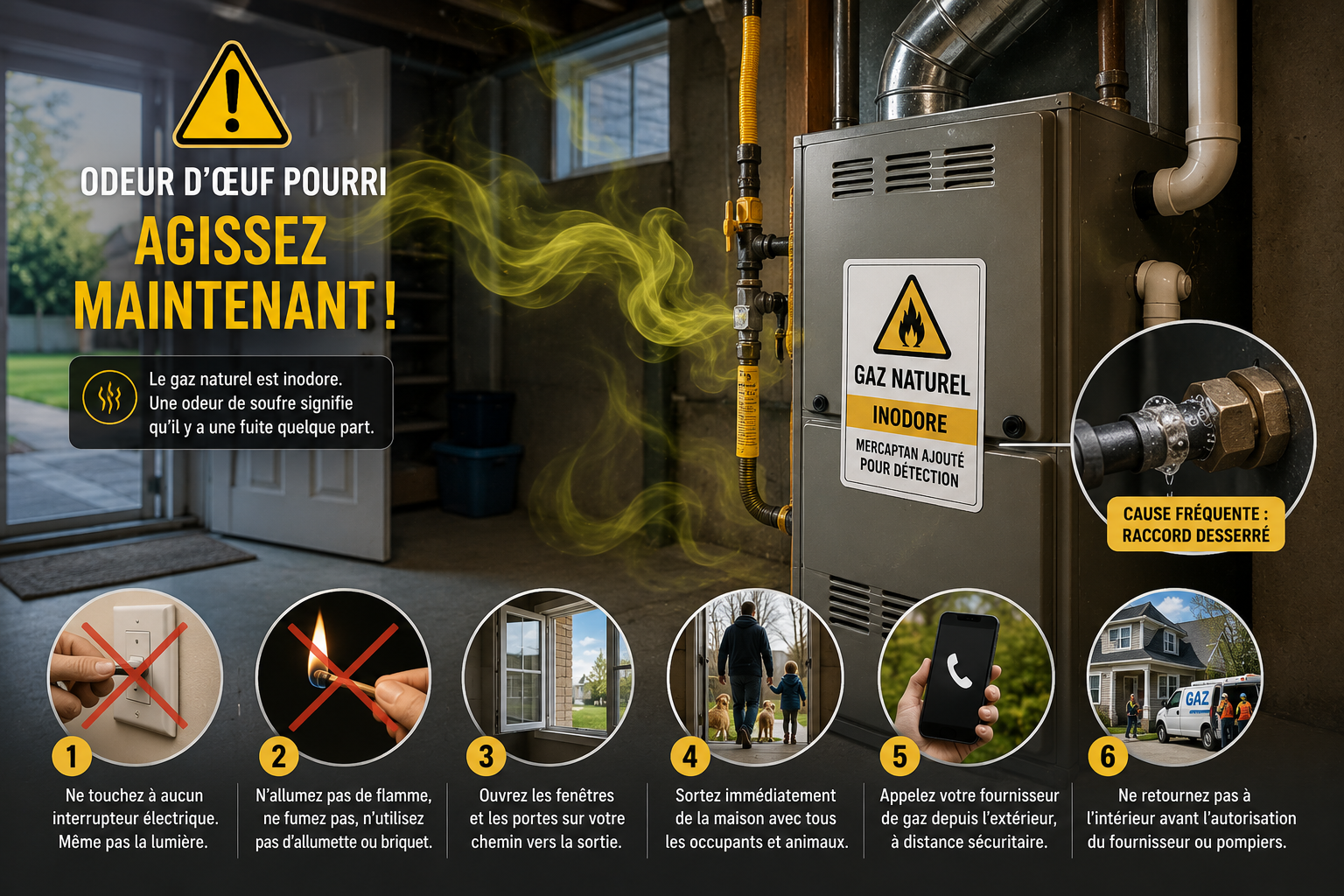
- Don't touch any electrical switch — not even a light switch, not even to turn it off on your way out. A simple electrical spark can ignite gas accumulated in the air.
- Don't light a flame, don't smoke, don't use a lighter or match.
- Open windows and doors on your way to the exit, if you can do so without delay.
- Leave the house immediately with all occupants and pets.
- Call your gas utility from outside, on a cell phone, once you're at a safe distance from the house.
- Don't go back inside until the gas utility or fire department explicitly confirms it's safe.
Why each step matters
The rule against touching switches isn't overcaution: the act of powering a standard switch produces a microscopic electrical arc, more than enough to ignite a natural gas concentration in the air. That's the same reason it's recommended to call from outside rather than from an indoor landline — even a cell phone screen lighting up in a gas-saturated room is theoretically best avoided, which is why getting out comes first, calling comes second.
What usually causes a leak
- A fitting or joint that has loosened over time — the most common cause, often quickly repairable once located
- A faulty gas valve inside the furnace — needs replacement by a qualified technician
- A cracked heat exchanger — particularly concerning, since it can also leak carbon monoxide (see our article on carbon monoxide warning signs)
- A damaged line from renovation work — a nail or screw that punctured a gas line behind a wall
A brief smell at startup isn't the same thing
A brief gas smell for a second or two, only right at the moment the furnace ignites, can be normal — it's simply residual gas from the previous cycle burning off in the burner. A smell that persists beyond that moment, that comes back repeatedly, or that gets stronger over time is never normal and deserves an inspection, even without an immediate emergency.
The extra layer of protection: a natural gas detector
Unlike carbon monoxide, a natural gas leak is generally detectable by smell before becoming dangerous — but smell can weaken with age, a cold, or during sleep. A natural gas detector installed near the furnace or gas water heater adds a layer of protection that doesn't rely on human alertness, particularly useful at night.
After the emergency
Once the situation is secured by professionals, a technician will need to inspect the entire gas system and repair the exact source of the leak before the furnace can be safely put back into service. Never attempt to restart the appliance yourself after an episode like this, even if the smell seems to have gone away.
Frequently asked questions
Should I call 911 or my gas utility?+
Both are valid options — many gas utilities have a 24/7 emergency line. If in doubt, 911 can also coordinate the response.
Is it dangerous if the smell is very faint?+
Mercaptan is detectable by smell well before the concentration becomes dangerous — but any persistent odor should be taken seriously.
Is a natural gas detector required?+
It's generally not a legal requirement the way a smoke detector is, but it's strongly recommended for any home heated with natural gas or propane.
How long should I wait after a leak before going back in?+
Never go back in based on your own judgment — wait for explicit confirmation from the gas utility or fire department, who use a detector to confirm the concentration has dropped to a safe level.
Get a free quote
More to know before your project.
By Marc Tremblay — Certified HVAC technician, 12 years of experience in Quebec
Updated on July 22, 2026