
My Heat Pump Is Making a Clicking or Grinding Noise: Causes & Fixes
It's two in the morning and a steady clicking has woken you up — it's coming from the outdoor unit. You're wondering whether it can wait until morning, or whether it's the kind of noise that ends in a full breakdown before sunrise. The good news: the exact type of noise almost always tells you what's happening, and how urgent it is.
A heat pump running normally produces a light, constant hum, barely noticeable from a few meters away. As soon as a new noise appears — especially if it changes character or intensifies — it almost always signals a specific mechanical part wearing out or loosening. Classifying it correctly is the difference between a $150 repair and a compressor replacement.
Clicking at startup or shutdown: usually normal
A brief click, lasting a second or two, right as the unit starts or stops is almost always normal — it's the electrical relay or check valve engaging. This sound should only last an instant. If it continues throughout the entire run cycle, the cause changes completely: it's likely an unbalanced fan, a damaged blade, or debris (a branch, ice, gravel kicked up by a lawnmower) caught against the outdoor unit's grille.
Continuous metallic grinding: a bearing wearing out
A sharp, continuous grinding sound resembling metal on metal almost always points to a fan motor bearing near the end of its life. This type of wear can't be repaired — the bearing doesn't get lubricated back to health, it gets replaced, generally by swapping the entire fan motor. The window to act is short: a motor that keeps running with a worn bearing eventually seizes abruptly, which can damage other electrical components in the system, turning a simple repair into a much bigger bill.
Loud humming and vibration: likely electrical
Unusually loud humming, combined with noticeable vibration in the outdoor unit or even in an interior wall, generally points to an electrical issue — a failing start capacitor or loose connections in the control box. This is one of the cases where it's better to cut power at the breaker and wait for a technician than to keep running the unit: a failing capacitor can force the compressor, the system's most expensive component.
Whistling or hissing: possible refrigerant leak
A sharp, continuous hissing sound can signal a refrigerant leak under pressure, usually at a fitting or valve. This isn't just a performance issue: a system low on refrigerant forces the compressor to work harder to produce the same output, accelerating its wear and potentially leading to a full, costly failure if the leak isn't sealed promptly.
Quick reference table
| Noise type | Likely cause | Urgency |
|---|---|---|
| Brief click at startup/shutdown | Relay or check valve | Normal, no action needed |
| Continuous clicking during the cycle | Unbalanced fan or debris | Moderate — inspect within the week |
| Sharp metallic grinding | Worn motor bearing | High — shut off and have it inspected promptly |
| Loud humming + vibration | Capacitor or electrical connection | High — cut power, call a technician |
| Continuous whistling/hissing | Refrigerant leak | High — the system loses efficiency every day |
What a technician checks on a noise call
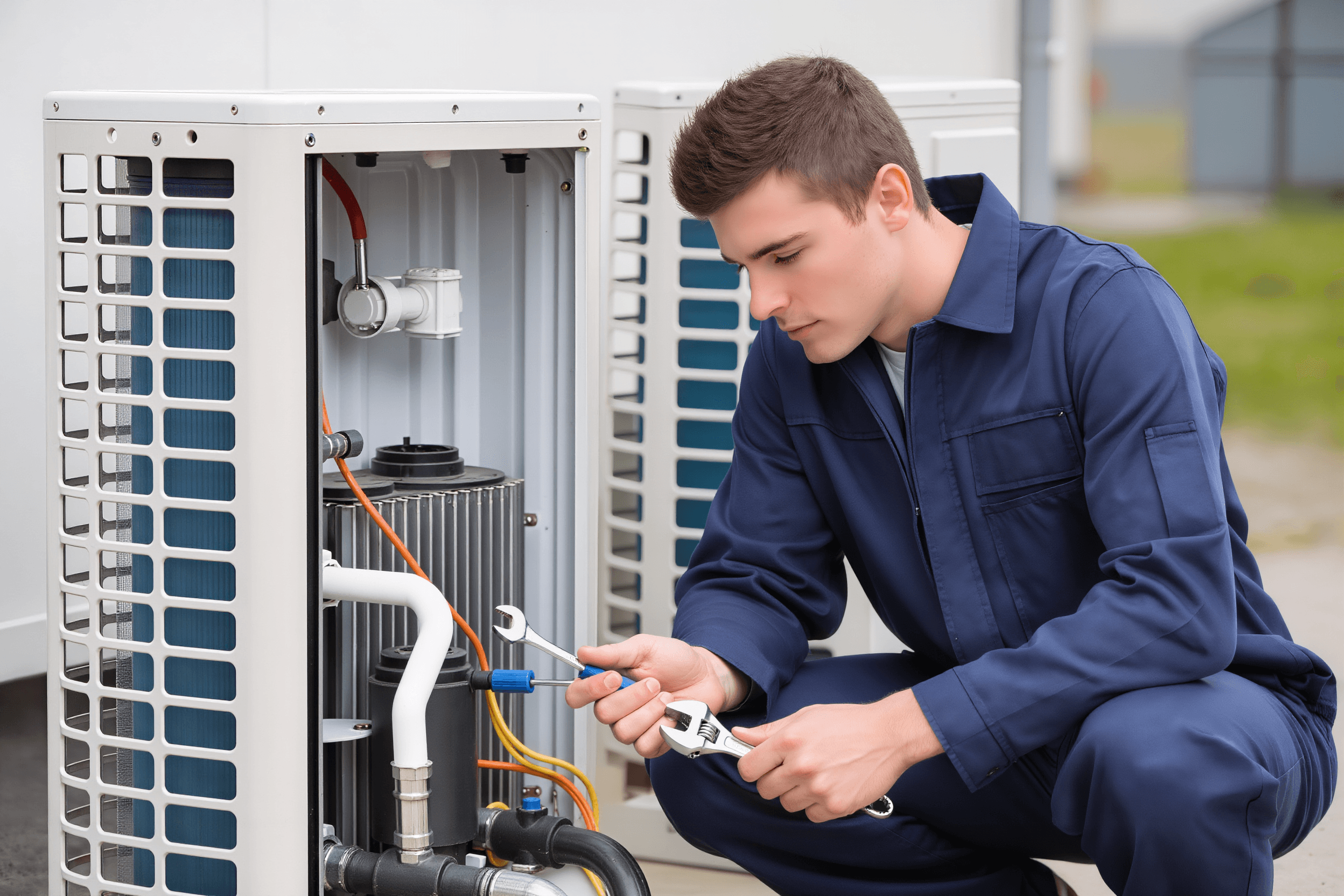
A serious diagnosis doesn't stop at listening to the noise: the technician visually inspects the fan and its blades, tests the capacitor with a multimeter, checks the tightness of electrical connections in the control box, and measures refrigerant pressure if a leak is suspected. This sequence generally isolates the exact cause in a single visit rather than swapping parts by trial and error.
When to act immediately rather than wait
- The noise comes with a drop in heating or cooling performance
- A burning smell accompanies the noise
- The noise appeared suddenly after a storm or a thaw followed by a freeze
- The noise is intensifying hour by hour rather than staying steady
In any of these cases, shut the unit off and have it inspected promptly rather than waiting for the annual maintenance visit — a system that keeps running with a failing component wears out surrounding parts faster than the failing component itself.
Frequently asked questions
Is an occasional noise normal?+
A light click at startup or shutdown is normal. A continuous noise that intensifies or changes character is not.
Can I keep using my heat pump if it's making noise?+
For a light click, yes in the short term. For grinding, hissing, or strong vibration, it's best to shut the unit off to avoid making the damage worse.
How much does it cost to fix a noisy heat pump?+
It depends on the part at fault: a capacitor generally costs less than a fan motor. A technician can diagnose the exact cause during a visit.
Can the noise come from the indoor unit instead of the outdoor unit?+
Yes — clicking from the indoor wall unit often points to a misaligned motorized louver or an indoor fan touching an obstruction, generally a less costly fix than outdoor unit issues.
Can annual maintenance prevent these noises?+
Largely, yes — tightening connections, cleaning the fan, and checking refrigerant during annual maintenance prevent most causes of abnormal noise before they get worse.
Get a free quote
More to know before your project.
By Marc Tremblay — Certified HVAC technician, 12 years of experience in Quebec
Updated on July 22, 2026