
Noise in the Ducts: Squirrel, Raccoon, or Dead Animal?
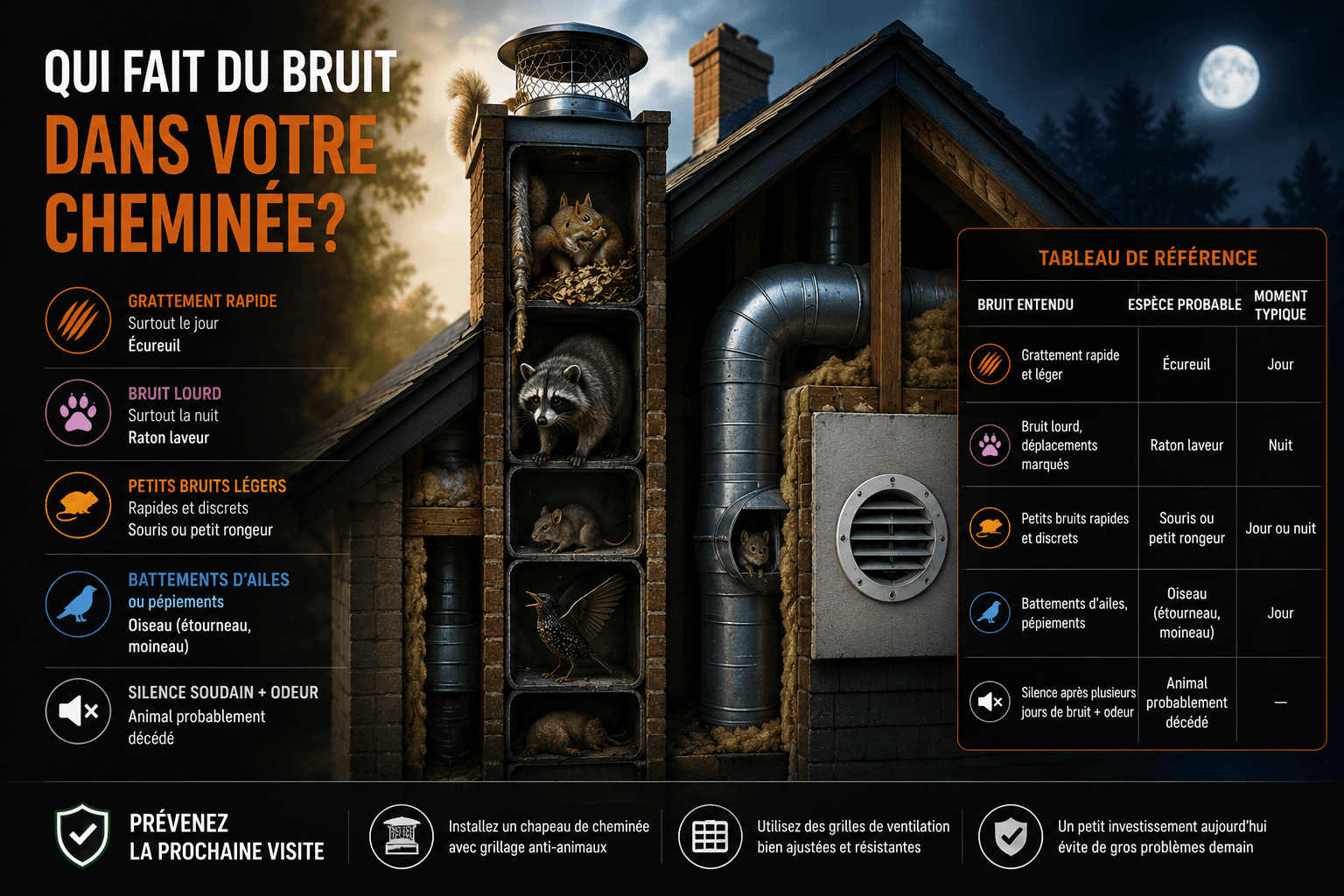
Chimney and vent ducts offer warm, dry shelter protected from predators — exactly what small animals look for, especially heading into winter or during spring birthing season. The type of noise you hear almost always identifies the species involved, even before an inspection.
Fast scratching sounds, mostly during the day
Usually a squirrel. Active during the day, it climbs and scratches at the metal or masonry walls looking for a way out or building a nest with materials it gradually brings in — leaves, twigs, torn-off insulation.
Heavy sounds, mostly at night
More likely a raccoon, a nocturnal animal that's notably heavier, whose movements are easily audible through the structure. A female may also settle in temporarily to give birth, which complicates things — evicting her too soon can separate a mother from her young, who will then die without her in the flue, a scenario that considerably worsens the problem rather than solving it.
Small, quick, light sounds
A mouse or other small rodent, more common in basement ventilation ducts than in the chimney itself, particularly in older homes with less airtight foundations.
Fluttering or chirping
A bird, often a starling or sparrow, that built a nest in the flue or got stuck falling in from the cap opening. Unlike mammals, a panicked bird can flutter intensely and at length, creating noise disproportionate to its size.
Sudden silence after several days of noise
This is the most concerning sign of all: the animal has likely stopped moving. If a sweetish smell starts developing as the silence sets in, it's almost always a dead animal rather than one that simply found its own way out.
Quick reference table by noise type
| Noise heard | Likely species | Typical timing |
|---|---|---|
| Fast, light scratching | Squirrel | Day |
| Heavy sounds, pronounced movement | Raccoon | Night |
| Small, quick, discreet sounds | Mouse or small rodent | Day or night |
| Fluttering, chirping | Bird (starling, sparrow) | Day |
| Silence after days of noise + smell | Animal likely deceased | — |
How animals get in in the first place
A missing or damaged chimney cap is by far the most common entry point — without a screen, the flue opening looks like any hollow tree cavity to a squirrel or raccoon looking for shelter. For ventilation ducts, a poorly fitted or weather-damaged exterior vent cover offers the same easy access to small rodents.
Why not to handle it yourself
A trapped animal can turn aggressive out of fear and panic, carry parasites or transmissible diseases, and certain species — notably raccoons — fall under wildlife regulations governing how their removal must be carried out. A qualified sweep or technician has the right equipment to safely remove the animal, for you and for the animal, and to then install protection that prevents a repeat the following year.
Preventing the next visit
A chimney cap fitted with an animal-proof screen and well-fitted, weather-resistant covers on every duct outlet remain the best long-term protection — a minor investment compared to the cost and unpleasantness of an animal removal, not to mention the smell that follows if the situation isn't handled in time.
Frequently asked questions
Can I light a fire to scare the animal away?+
No, never do this. An animal can panic, get stuck and die in the flue, or worse, come into the house to escape the smoke.
How long can an animal survive stuck in a chimney?+
It varies by species and access to water, but many animals only survive a few days without food or water in that enclosed environment.
Can the noise come from more than one animal at once?+
Yes, particularly in spring when a female settles in with a litter — several simultaneous small sounds can indicate young rather than a single adult animal.
What should I do if I'm not sure there's really an animal?+
A camera inspection confirms or rules out an animal's presence within minutes, avoiding guesswork based on sound alone.
Get a free quote
More to know before your project.
By Sophie Bouchard — Certified chimney sweep, residential fire safety specialist
Updated on July 22, 2026