
Wall-Mounted vs Central Heat Pump: Which One to Choose
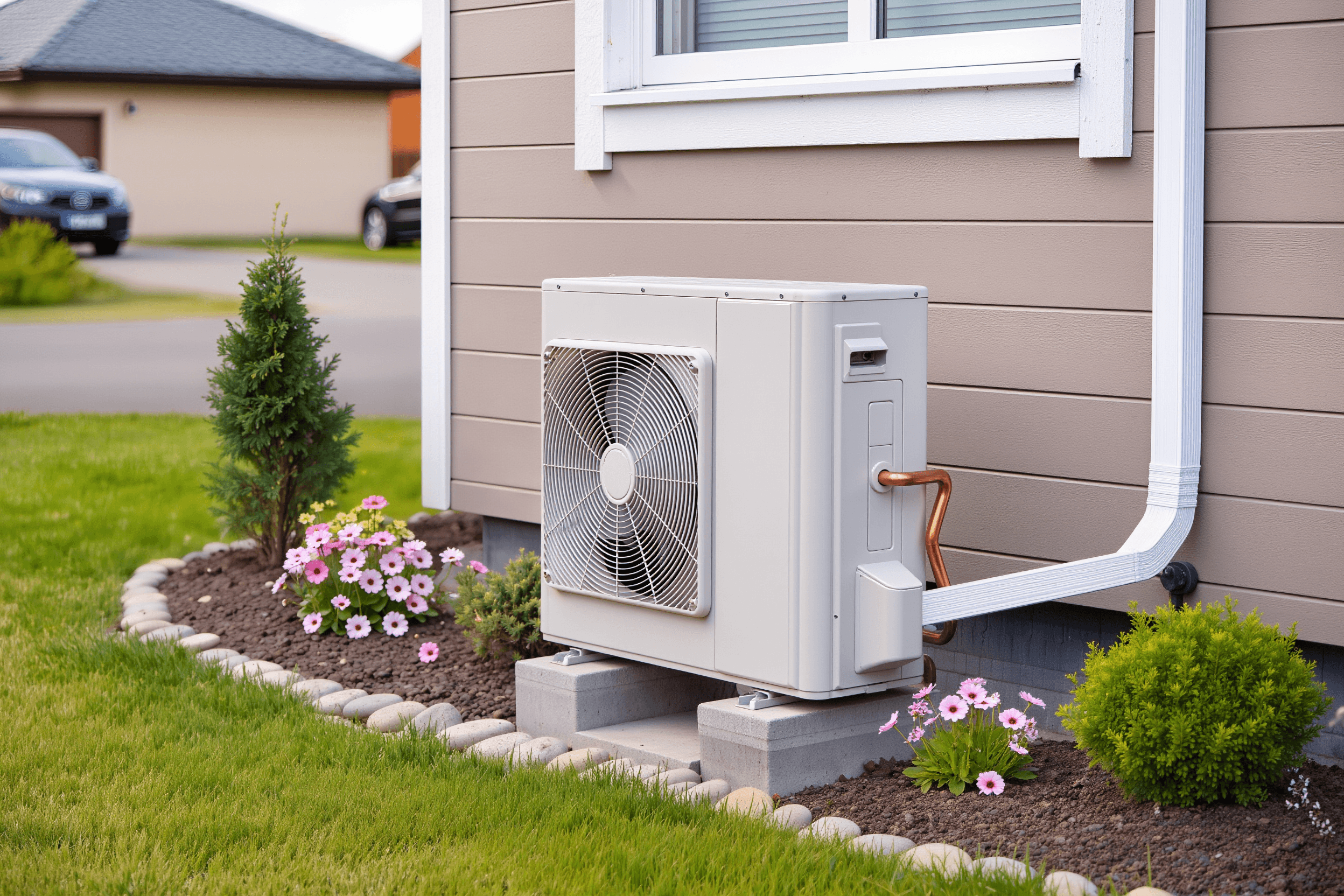
The "wall-mounted or central" question almost always comes down to one thing: do you already have functional ductwork in your home? If the answer is no, the decision is largely made before you even compare brands or prices.
Wall-mounted (or multi-zone) heat pump
An indoor unit mounted on the wall, connected directly to an outdoor unit via a refrigerant line without going through ducts. It's the most common choice for:
- Homes without existing ductwork — electric baseboard heating, very common across Quebec's housing stock, particularly older duplexes and triplexes
- Renovations where adding ducts would be costly or structurally impossible — low ceilings, poorly positioned load-bearing walls
- Targeted heating and cooling of one or two specific rooms — a finished basement, a bedroom above a garage, a recent addition
A multi-zone system lets you connect up to eight wall units (depending on the model) to a single outdoor unit, each with its own independent temperature control — a real advantage for households where occupants have different comfort preferences.
Central heat pump
Connects to the home's existing duct network, exactly like a forced-air furnace or a traditional central air conditioner. Ideal for:
- Homes already equipped with functional ductwork — existing forced-air heating, whether gas, oil, or electric
- More uniform temperature distribution throughout the home, without pronounced hot or cold zones
- Homeowners who prefer complete visual discretion — no units visible on walls, only vents that are already there
The real financial issue: the cost of ductwork
The economic math flips entirely depending on whether ducts already exist. Installing ducts in a home that's never had them means major construction work — opening up walls and ceilings, losing livable space to duct runs — which easily pushes the project well beyond the cost of an equivalent multi-zone wall-unit system. That's why, in a market like Quebec where a large share of the housing stock is heated with electric baseboards and no ducts, wall-mounted heat pumps dominate new installations.
Quick comparison
| Criteria | Wall-mounted | Central |
|---|---|---|
| Ductwork required | No | Yes (existing or new) |
| Per-room control | Yes, individual per unit | Limited (central thermostat or zoning) |
| Cost if no existing ducts | Notably lower | Much higher (construction required) |
| Visual discretion | Units visible on walls | Invisible (vents only) |
| Temperature distribution | Excellent in controlled rooms, variable elsewhere | More uniform throughout the home |
| Ease of future expansion | Easy to add a zone | Often requires reworking the network |
What drives the decision beyond ductwork
Even with existing ducts, some homeowners still opt for wall units in specific rooms — a basement not connected to the main network, for example — creating a hybrid approach. Conversely, a homeowner willing to invest in adding ducts might prefer central for the aesthetics and even distribution, despite the higher cost.
Our recommendation
If you don't have ducts, a wall-mounted heat pump is almost always the more affordable and faster-to-install choice — and in most cases in Quebec, it's the only realistic option without major construction. If you already have a working forced-air system, a central heat pump plugs into it naturally and generally distributes heat more evenly throughout the home.
Frequently asked questions
Can I combine both systems?+
Yes, some homes use a central heat pump for common areas and wall units for specific rooms like a finished basement.
How many wall units can connect to one outdoor unit?+
Generally up to 5-8 units depending on the model and outdoor unit capacity — your installer can calculate the optimal configuration based on each room's size.
Is a central heat pump quieter than a wall-mounted one?+
Generally yes indoors, since operating noise comes from the outdoor unit and vents rather than a visible wall unit in the room.
Get a free quote
More to know before your project.
By Marc Tremblay — Certified HVAC technician, 12 years of experience in Quebec
Updated on July 22, 2026