
Wood Stove vs Gas Fireplace vs Pellet Stove: Complete Comparison
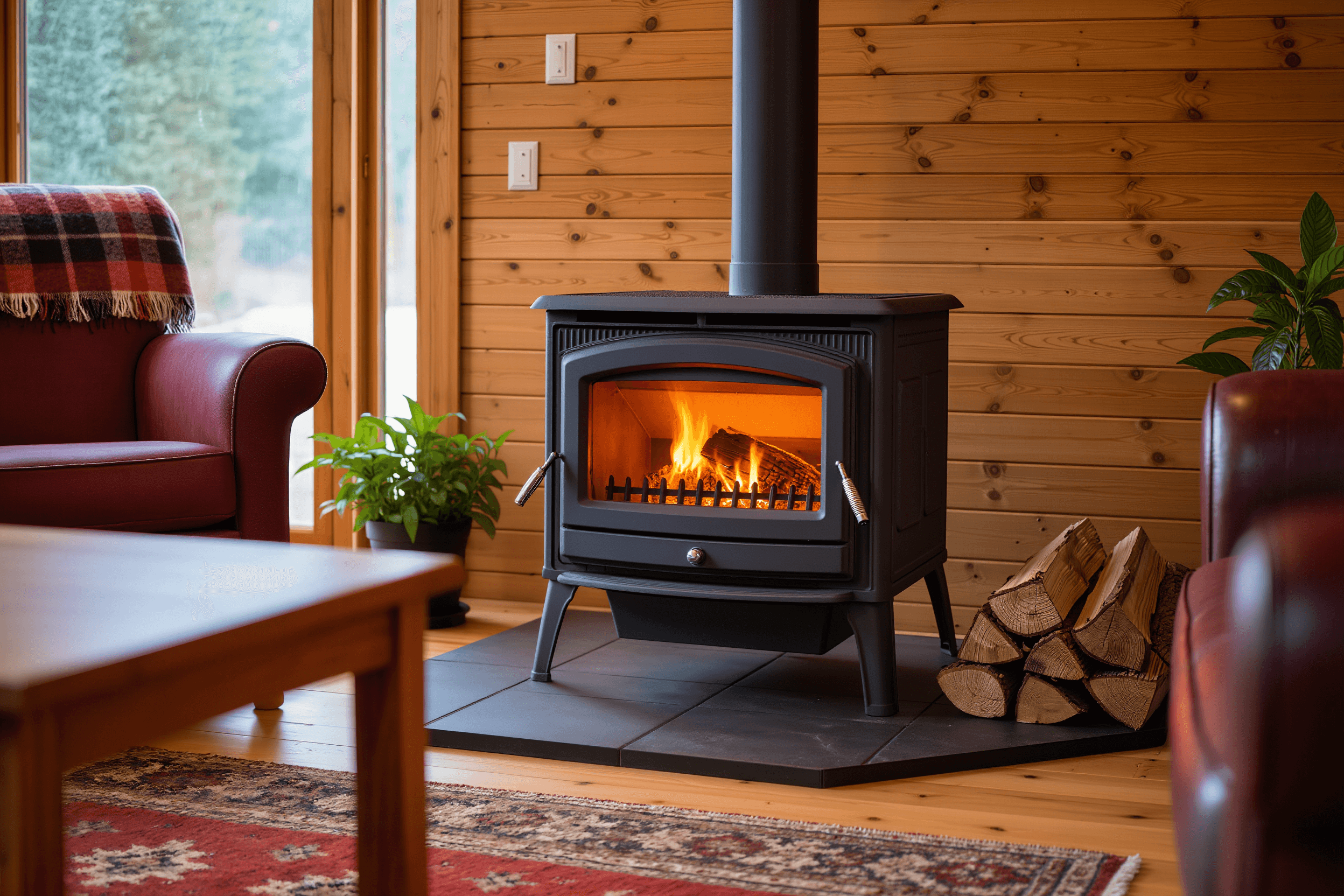
The right choice depends mostly on what you're after: the authentic ambiance of real burning wood, the convenience of an appliance you switch on by remote, or a compromise between the two — and each of these three options comes with a completely different maintenance profile that's worth knowing before buying, not after.
Traditional wood stove
Pros: the most intense heat of the three options, unmatched authentic ambiance, works entirely without electricity — a valuable trait during a prolonged winter power outage, exactly when heating matters most.
Cons: requires sourcing, cutting (or buying), and storing wood in a dry space; annual sweeping is essential due to inevitable creosote buildup; manual lighting every use, without the convenience of a switch.
Maintenance: mandatory annual sweep — see our creosote guide to understand why this isn't optional — and regular ash cleanout.
Gas fireplace
Pros: instant on with a switch or remote, no ash or creosote to manage day to day, steady and easily adjustable heat without active supervision.
Cons: visually and audibly less authentic than a real wood fire, fully dependent on gas supply (so unusable during a power outage if ignition is electronic), generally higher upfront installation cost than a comparable wood stove.
Maintenance: an annual inspection is recommended to check fitting airtightness and proper ignition system function — poor maintenance on this type of appliance can lead to carbon monoxide risks, not just a breakdown.
Pellet stove
Pros: notably higher combustion efficiency than traditional wood, automatic feed from a hopper that eliminates the need to reload every hour, generally lower creosote buildup than a classic wood stove.
Cons: needs electricity to run since the feed auger and fan are electric — unusable during an outage without a generator; pellets must be bought in bags or bulk and stored somewhere dry; continuous fan operating noise, noticeable during extended use.
Maintenance: more frequent ash pan cleaning than a traditional wood stove due to the volume of pellets consumed, but flue creosote buildup generally stays lower thanks to more complete, more consistent combustion.
Quick comparison
| Criteria | Wood | Gas | Pellet |
|---|---|---|---|
| Works without power | Yes | No (electronic ignition) | No |
| Authentic ambiance | High | Low-medium | Medium |
| Flue maintenance | Mandatory annual sweep | Annual inspection | Frequent cleaning, sweeping less critical |
| Everyday convenience | Low | High | Medium-high |
| Reliability during an outage | Excellent | Low | Low without a generator |
What matters most depends on your real priority
If reliability during a winter outage is your top priority, the wood stove remains in a class of its own — it's the only one of the three that works entirely off the grid. If you're after convenience and minimal day-to-day maintenance above all, the gas fireplace wins clearly. If you want to combine solid heating efficiency with lighter maintenance than traditional wood, and electricity isn't a major concern, the pellet stove offers the best compromise of the three.
Our recommendation
For reliable backup heat during an outage, a wood stove remains unbeatable. For pure everyday convenience, the gas fireplace wins. A pellet stove offers an interesting middle ground between efficiency and ambiance, provided you have reliable access to electricity — or a generator in reserve.
Frequently asked questions
Can a gas fireplace be installed in a home without a natural gas hookup?+
Yes, several models run on propane fed from an outdoor tank, without needing a connection to the natural gas network.
Can a pellet stove run during an outage with a generator?+
Yes — a pellet stove's electrical draw is generally modest, making it compatible with most standard residential generators.
Which of the three costs the least to run?+
This depends heavily on local wood, pellet, and gas prices, which vary by region and season — none of the three is universally the cheapest.
Get a free quote
More to know before your project.
By Sophie Bouchard — Certified chimney sweep, residential fire safety specialist
Updated on July 22, 2026